






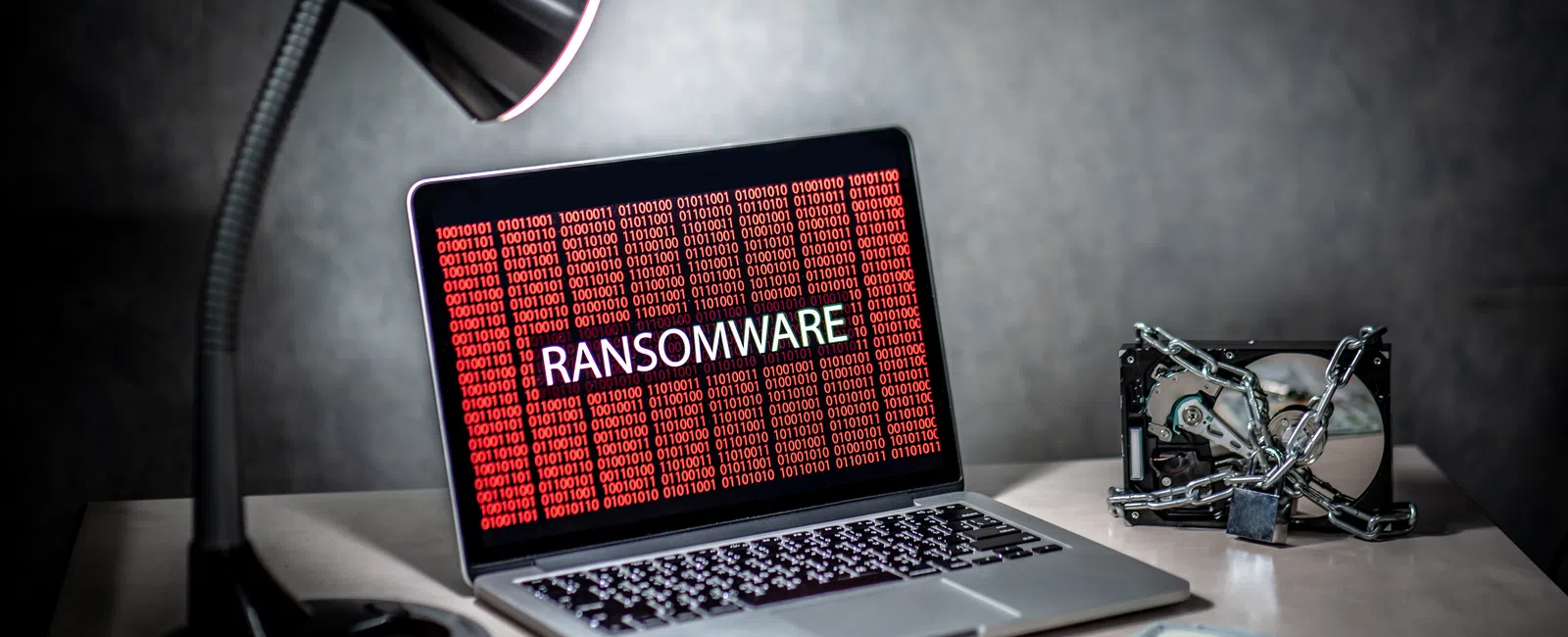
A small accounting firm in a mid-size city pays its bills on a Tuesday morning, and by Wednesday afternoon every file on every workstation is encrypted. The ransom note is sitting on the receptionist's screen, and the owner has no idea whether their last backup is clean or compromised. This is not a hypothetical. This is a real possibility.
Ransomware operators have deliberately shifted focus toward small and midsize businesses because SMBs hold valuable data like client records, financial files, and medical information, but lack the security infrastructure that larger enterprises maintain. The FBI has consistently reported small businesses among the most frequently targeted organizations in ransomware campaigns.
The "we're too small to matter" assumption is dangerous because attackers don't manually choose victims. Automated tools scan the internet for exposed ports, unpatched software, and weak credentials around the clock. A vulnerable system gets flagged regardless of whether it belongs to a Fortune 500 company or a ten-person firm.
Financial firms managing sensitive client data face especially high exposure, but no vertical is exempt. A phishing email lands in an employee's inbox on a Tuesday afternoon. They click. By that night, malware is quietly executing on the network and no one knows yet.
Ransomware attacks follow a predictable progression: initial access, a silent dwell period, and then detonation. The ransom note appearing on screen is the final step and by that point, attackers have already been inside the network for hours or days, and the damage is done.
Common Ransomware Entry Points
- RDP exploitation: Remote Desktop Protocol is a remote-access feature built into Windows. Attackers scan for RDP ports left open to the internet and brute-force weak passwords to gain entry.
- Malicious email attachments: A convincing invoice or shipping notice delivers a payload when opened.
- Drive-by downloads: Visiting a compromised website can silently install malware without any user action beyond loading the page.
Why Dwell Time Is the Real Danger
After gaining access, attackers spend the dwell period mapping the network, escalating privileges, and, critically, identifying and disabling backup processes. When encryption finally detonates, recovery options are already compromised. Detection speed is everything: a threat caught in the dwell phase can be contained; one caught at detonation means triage under fire.
The 5 Layers of Defense
Antivirus software and a firewall are not sufficient ransomware protection for small businesses. A layered defense stack addresses the attack surface at every stage (endpoint, identity, network, human, and software) because attackers will probe all of them.
- Endpoint Detection and Response (EDR): EDR replaces legacy antivirus, which only detects known malware signatures. Without EDR, novel ransomware variants execute undetected.
- Multi-Factor Authentication (MFA): MFA requires a second verification step beyond a password for email and remote access. Without MFA, a stolen credential is an open door.
- Network Segmentation: Network segmentation divides a business network into isolated zones so one infected workstation cannot reach every other device. Without segmentation, ransomware spreads laterally until everything is encrypted.
- Phishing Awareness Training: Ongoing phishing simulation and training reduces the likelihood that employees click malicious links. A one-time annual session is not sufficient — attackers evolve their lures continuously.
- Patch Management: Patch management ensures operating systems and software are updated promptly to close known vulnerabilities. Unpatched systems are among the most common ransomware entry points because attackers scan for them at scale.
Why Managed Cybersecurity is the Practical Answer for Small Businesses
Most small businesses cannot afford a full-time security analyst, and a generalist IT person (internal or break-fix) is not monitoring for threats at 2 AM when ransomware frequently detonates. This is the gap managed cybersecurity services are built to fill.
Maise Technology's managed cybersecurity services deliver 24/7 monitoring, EDR tooling, tested backup and disaster recovery, and incident response planning sized for SMBs, not enterprise budgets. Salt Lake City's expanding tech and finance sectors, along with businesses in Provo, Ogden, and Sandy, are increasingly attractive ransomware targets precisely because the data density is growing.
Financial and healthcare-adjacent businesses in Utah also face regulatory obligations around breach notification and security controls. Maise Technology's compliance requirements support helps those businesses meet their obligations before an incident forces the issue.
The honest contrast: antivirus and a firewall stop known, generic threats. Layered managed security like continuous monitoring, tested backups, and a rehearsed response plan addresses what break-fix IT and DIY setups leave dangerously open, especially after an attack is already in progress.
Frequently Asked Questions
Should a small business pay the ransom if attacked?
No — not without first consulting a cybersecurity professional. Payment does not guarantee file restoration, and some ransomware operators demand additional payment after receiving the first. Law enforcement and security professionals should be engaged before any ransom decision is made.
How long does it take to recover from a ransomware attack?
Recovery time depends on the quality of backups and the existence of a tested incident response plan. Businesses with clean, verified backups and a documented recovery process can restore operations in days. Those without them often face weeks of downtime — or permanent data loss.
Does cyber insurance cover ransomware attacks?
Many cyber insurance policies do cover ransomware, including ransom payments and recovery costs, but coverage terms vary significantly. Insurers increasingly require evidence of specific security controls — like MFA and EDR — before issuing or renewing policies. Review your policy before an incident, not after.
What is the difference between a backup and a ransomware-safe backup?
A standard backup copies data but may remain connected to the network — ransomware can reach and encrypt it. A ransomware-safe backup follows the 3-2-1 rule: three copies, two media types, one offsite or air-gapped. It has also been tested with an actual restore to confirm recovery is possible.
Schedule a free 15-minute discovery call with Maise Technology and we'll show you exactly where your current defenses have gaps and what it would take to close them before an attacker finds them first.
Schedule Your Free 15-Minute Discovery Call Assessment

