






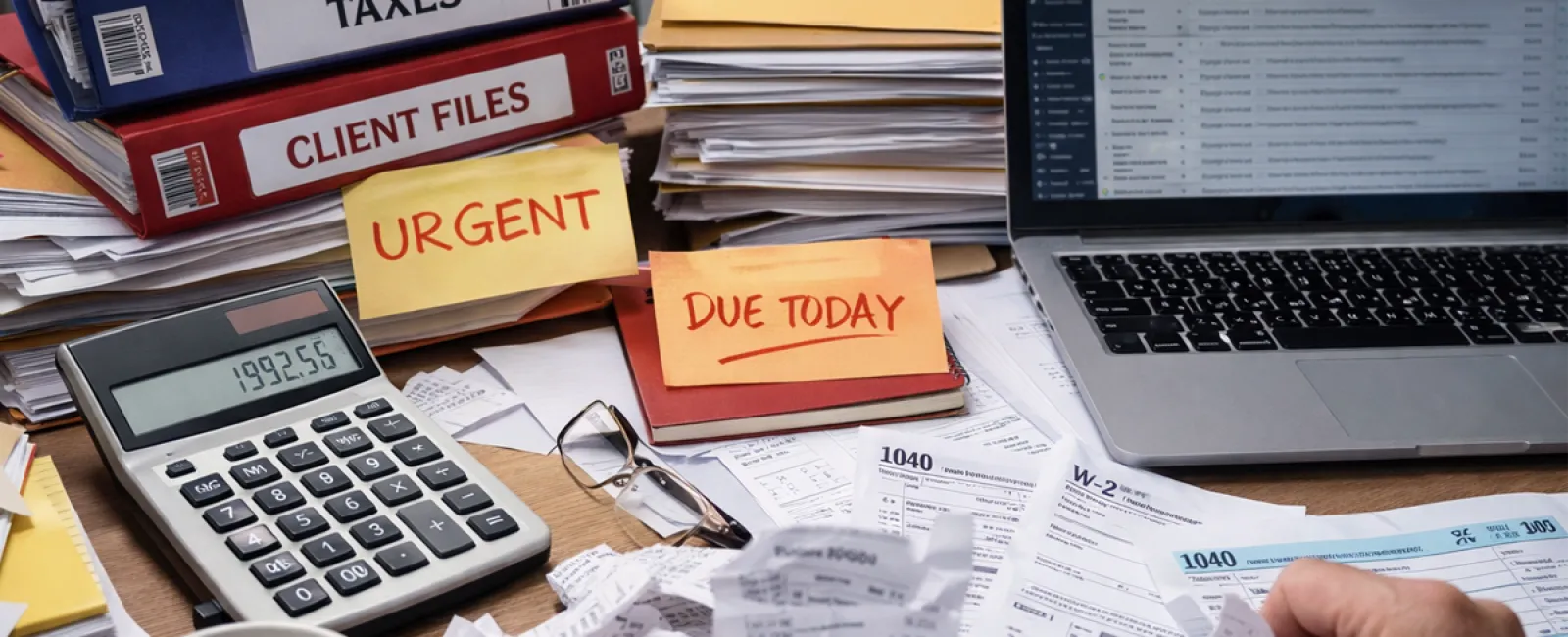
March is here.
Your accounting team is overwhelmed, bookkeepers are rushing, deadlines loom, and your inbox is flooded with emails flying in at breakneck speed.
Everyone is focused, just trying to make it through the busiest tax period.
This scenario is nothing new to you.
But hackers know this too.
Security experts observe a dramatic surge in phishing attacks during tax season, with March seeing about a 28% rise in tax-related scam emails compared to calmer months. These scams are subtle, designed to look like everyday business communications exactly when staff are most distracted.
This is no accident.
It's strategic timing.
Here's what to expect and four straightforward strategies to shield your business from becoming an easy victim.
Tax Season Strains the Supply Chain
What many overlook is this:
Hackers aren't only aiming at accounting firms.
They target the chaos surrounding them.
During tax season:
- Clients hastily send sensitive documents
- Staff skip usual checks just to keep pace
- "Just send me the file" replaces standard precautions
- Verification processes are bypassed as everyone is overwhelmed
The entire workflow accelerates.
And rapid work invites errors.
Hackers exploit busy environments, not calm ones.
March is a hotspot.
What These Phishing Attacks Actually Look Like
This isn't fiction.
Fraudulent emails can imitate the ones you get every day.
- A message from "your accountant" requesting you resend W-2s due to a transmission error
- A vendor notice claiming a change in bank details needing immediate update
- A mock DocuSign request asking you to sign a tax document "today"
- An urgent email from "your CEO" who is traveling and asks for fast assistance
These emails appear legitimate.
They blend perfectly into the busy business rhythm of March.
That's what makes them effective.
Why Busy Professionals Fall for These Scams
This isn't about neglect.
It's about human nature.
When inboxes overflow and deadlines surround you, people tend to skim messages, make assumptions, and respond quickly.
Scammers exploit this dynamic.
Their emails are crafted for rushed readers missing one key inconsistency. They don't ask you to be reckless—just busy.
In March, nearly everyone is busy.
Four Easy Habits to Avoid Becoming an Easy Target
The good news? Protecting yourself doesn't require complex software or a dedicated security team.
It just takes a few deliberate practices during peak times.
1. Verify Payment Changes by Phone
If you receive an email stating a vendor's bank information has changed, don't reply via email.
Call the known, trusted number to confirm the update verbally.
This simple step blocks some of the costliest scams.
2. Pause on Urgent Requests for Sensitive Data
Urgency is a red flag to slow down, not speed up.
When asked for W-2s, tax forms, or financial files "immediately," take time to verify.
Legitimate senders expect a brief wait; scammers won't tolerate delay.
3. Confirm Time-Sensitive Requests Via Another Channel
If an email insists on urgent action, check it through a phone call, text, or internal chat.
A quick verification can stop fraud before damage occurs.
True emergencies withstand a two-minute check; fake ones disappear.
4. Alert Your Team About Scam Risks
This week, remind your staff that tax season is prime for scams.
Encourage them to slow down, double-check, and question anything unusual.
This mindset shift helps avoid costly mistakes.
Key Takeaway
Tax season is stressful enough without the added burden of falling for a scam.
These attacks aren't innovative, just perfectly timed.
They exploit rushed people, snap judgments, and the pressure to get through March.
You don't need to overhaul your entire system to be safer.
Slowing down and verifying urgent requests often makes all the difference.
That alone can protect your business.
Quick Busy-Season Security Check
Your company may already have strong security habits.
But if tax season pushes your team into reactive mode or you're uncertain about handling urgent requests under pressure, a quick assessment could help with a free 15-Minute Discovery Call.
No panic tactics, no pressure—just straightforward advice on simple habits to dodge big problems this season.
If this isn't relevant to your business, please forward it to someone who would benefit.
Click here or give us a call at 888-624-7383 to schedule your free 15-Minute Discovery Call.


